Santa Barbara County Arrest Records are official public documents that capture every arrest made by local, state, and federal law‑enforcement agencies within the county. Each file lists the charged offense, arrest date, filing agency, and booking number, and the records are maintained by the Santa Barbara County Sheriff’s Office, the California Department of Justice, and the Federal Bureau of Investigation. Residents, journalists, and attorneys may obtain these files in person, by mail, or through the county’s online open records portal, which requires a completed request form and a small processing fee.
How to Search Santa Barbara County Arrest Records
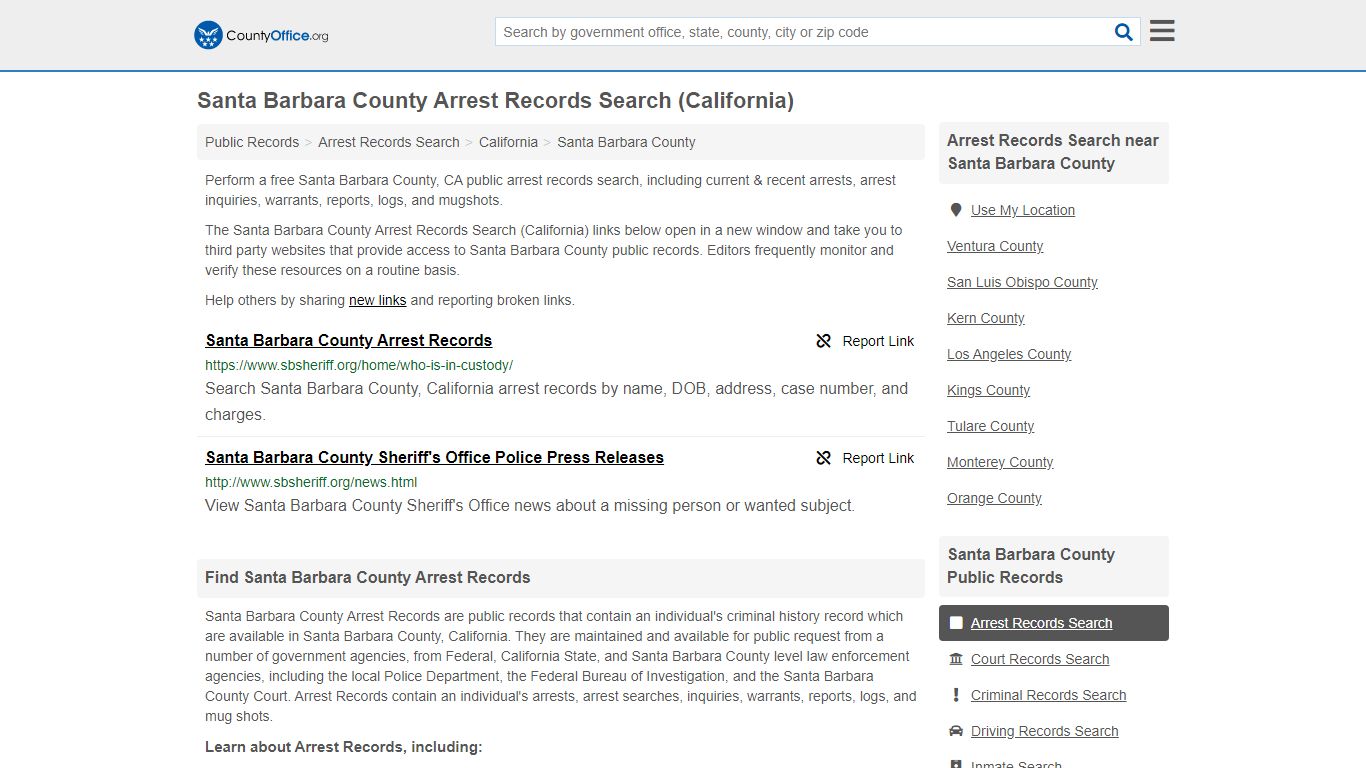
Searching for arrest records in Santa Barbara County is simple and free. The Sheriff’s Office provides multiple ways to access this information. You can visit the Records Bureau at 1330 State Street, Santa Barbara, or call (805) 681‑4180 to check if a report is ready. Online, the “Who Is In Custody” portal updates every 30 minutes with current detainee details, including photos, charges, bail amounts, and release dates. For past arrests, use the county’s open records request system. Fill out a form, attach a copy of your ID, and pay a small fee. Most requests are processed within five to seven business days.
Types of Arrest Records Available
Arrest records in Santa Barbara County include several key pieces of information. Every record shows the person’s name, age, gender, and booking photo. It also lists the exact charge, such as DUI, drug possession, or theft. The date and location of the arrest are included, along with the agency that made it—like the Santa Barbara Police Department or CHP. Each file has a unique booking number used to track the case. Some records also show bail amounts, court dates, and whether the person was released or remains in custody. These documents are public under California law, so anyone can request them.
Who Can Access Arrest Records?
Anyone can access Santa Barbara County arrest records. There are no restrictions based on relationship or purpose. Journalists use them to report on crime trends. Lawyers review them for legal cases. Family members check on loved ones. Employers may request them for background checks, though they must follow state laws. The Sheriff’s Office does not verify the accuracy of third-party sites that sell this data. For the most reliable info, always go directly to official sources like the Sheriff’s website or courthouse.
2023 Arrest Data Breakdown by Age and Crime
In 2023, the Santa Barbara County Sheriff’s Office released detailed arrest statistics. People aged 21 to 30 accounted for 37.06% of all arrests—the highest group. Those aged 10–20 made up 18.5%, while ages 31–40 were 22.4%. Ages 41–50 and 51–60 represented 12.3% and 9.8%, respectively. The most common crimes among young adults were drug possession, driving under the influence, and misdemeanor theft. Each of these offenses appeared in over 5% of all arrests. This data helps the community understand local crime patterns and supports better policing strategies.
| Age Group | Percentage of Arrests |
|---|---|
| 10–20 | 18.5% |
| 21–30 | 37.06% |
| 31–40 | 22.4% |
| 41–50 | 12.3% |
| 51–60 | 9.8% |
How to Request a Copy of an Arrest Report
To get a copy of an arrest report, start by calling the Records Bureau at (805) 681‑4180. Ask if the report is available and get the case number. Then, submit a written request with your name, contact info, case number, and a description of the document. Include a copy of your photo ID and a $15 processing fee. You can mail it to 1330 State Street, Santa Barbara, CA 93101, or drop it off in person. Simple reports take 7–10 days. Complex cases involving multiple agencies may take up to two weeks. Once ready, you’ll receive it by mail or email.
Online Tools for Real-Time Arrest Information
The Sheriff’s Office offers free online tools to track arrests. The “Who Is In Custody” portal shows everyone currently held in the county jail. It updates every 30 minutes with names, photos, charges, bail amounts, and expected release dates. Another tool, Local Crime News, publishes daily arrest logs from all cities in the county. You can search by name, date, or offense type. Both platforms help residents stay informed about local safety and support transparency in law enforcement.
Court Records vs. Arrest Records: What’s the Difference?
Arrest records show when someone was taken into custody. Court records show what happened after—like charges filed, court hearings, and final judgments. In Santa Barbara County, arrest records come from the Sheriff’s Office. Court records are managed by the Superior Court. You can search civil, criminal, family, and traffic cases online using the court’s public portal. However, there is no online index for criminal cases yet. To view a criminal file, visit the Records Window at 1100 Anacapa Street during business hours. Bring your ID and pay a copy fee.
Fees and Processing Times for Record Requests
Requesting arrest records involves small fees and wait times. The standard processing fee is $15 per report. If you need certified copies, add $25. Payment methods include cash, check, or money order. Mail requests should include a self-addressed stamped envelope. Most standard requests are completed in 5–7 business days. Complex cases, like those involving ongoing investigations, may take longer. Call ahead to confirm timing and avoid delays.
Privacy and Legal Considerations
While arrest records are public, some details may be redacted to protect privacy. For example, juvenile records are sealed. Victims of certain crimes may have their names hidden. Also, not all arrests lead to convictions. A record does not prove guilt—only that someone was arrested. Employers and landlords must follow fair credit reporting laws when using this data. Always verify information with official sources to avoid mistakes.
Historical Records and Digitization Efforts
The County Clerk‑Recorder has been digitizing old records to preserve them. One project focused on the Water Claims Book from 1877 to 1918. Pages were de‑acidified to stop decay, scanned at high resolution, and saved as searchable PDFs. This effort is part of a larger plan to convert all paper records from 1850 to 1993 into digital format. These archives help researchers, historians, and families trace legal and property history in the county.
Contact Information for Official Requests
For arrest records, contact the Santa Barbara County Sheriff’s Office Records Bureau. Address: 1330 State Street, Santa Barbara, CA 93101. Phone: (805) 681‑4180. Hours: Monday–Friday, 8:00 a.m. to 5:00 p.m. For court records, visit the Superior Court at 1100 Anacapa Street, Hall of Records. Phone: (805) 614‑6767. Both offices accept walk-ins but recommend calling first. Always bring a valid photo ID.
Frequently Asked Questions
Many people have questions about how to access and use arrest records. Below are answers to the most common ones. These cover everything from fees to legal rights. If you don’t find what you need, call the Sheriff’s Office or visit the courthouse in person.
Can I get someone’s arrest record without their permission?
Yes. Arrest records are public under California law. You do not need the person’s consent to request their record. However, you must provide your own ID and follow the proper request process. Third-party websites may charge more, but official sources like the Sheriff’s Office offer the same info for less.
Are arrest records the same as criminal records?
No. An arrest record only shows that someone was taken into custody. A criminal record includes charges, court outcomes, and convictions. Not everyone arrested is convicted. Always check both types of records for a complete picture.
How long does it take to get an arrest report?
Most reports are ready in 5–7 business days. Simple misdemeanor cases may be faster. Complex investigations can take up to two weeks. Call the Records Bureau before submitting your request to confirm timing.
Can I search arrest records by name online?
Yes, but only for current inmates. Use the “Who Is In Custody” portal for real-time jail listings. For past arrests, you must submit a formal request. There is no public database of all historical arrest records online.
Do I have to pay to view arrest records?
Yes, there is a $15 fee per report. Certified copies cost extra. Fees help cover processing and staffing costs. Some nonprofit organizations may assist low-income individuals with fee waivers.
Are juvenile arrest records public?
No. Juvenile records are sealed by law to protect young people’s privacy. Only authorized agencies, parents, or legal guardians can access them. Adult records are fully public.
What if the record has wrong information?
If you find an error, contact the Records Bureau immediately. Provide proof of the mistake, like a court dismissal notice. The Sheriff’s Office will review and correct it if needed. Incorrect records can affect jobs, housing, and reputation.